
PJ & Roy’s Story
pj & roy“We don’t think of our lives as a ‘legacy’, but more of a continuum, something fluid, life-affirming, constantly changing and revitalizing.”
Japanese American roots.
PJ and Roy Hirabayashi are 3rd-generation sansei Japanese Americans, born in the early 1950’s in California - PJ in San Rafael and Roy in Berkeley.
They first crossed paths while attending California State University Hayward in 1969 and married in 1975. Their first-generation grandparents immigrated to the United States from Japan before WWII into an unknown world of much uncertainty and promise. As they acclimated to life in America, they relied upon the values and core beliefs ingrained in them from their Japanese culture. These values were handed down in practice to PJ & Roy’s parents, who are second generation Japanese American. The core of their character is founded on these values and beliefs which they’ve abided by with unfaltering consistency.


Starting a taiko group from scratch.
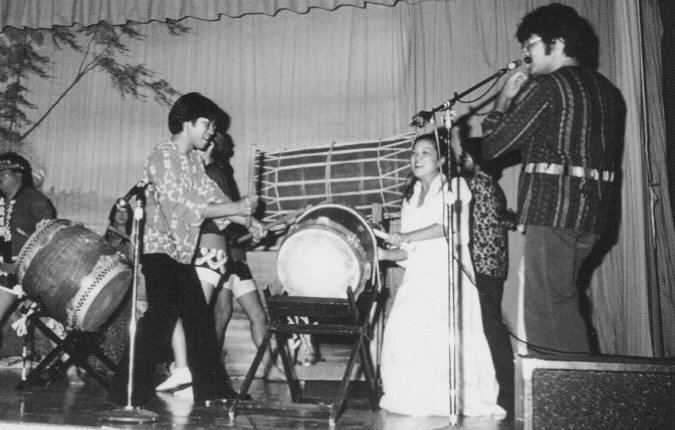
It was in 1973 when Roy and two friends, Dean Miyakusu and Rev. Hiroshi Abiko, started taiko at the San Jose Buddhist Church as a youth project.
They were seeking a way to encourage the youth at the Temple to come together, socialize, and learn about Japanese culture through a Japanese instrument—the taiko. Soon, other members from the community joined to form “San Jose Taiko Group” (SJTG), the third taiko group in North America. The group began to play for Japanese American and Asian American community events throughout the Bay Area.
The first two taiko groups in North America—San Francisco Taiko Dojo and Kinnara in Los Angeles provided significant inspiration for SJTG. Kinnara showed how they crafted their taiko from wine barrels which allowed taiko to grow in America and Seiichi Tanaka of San Francisco Taiko Dojo taught taiko fundamentals to play with abandonment and spirit.
Finding an identity.
“Knowing we were stereotyped as quiet and reserved, we realized that taiko could be our voice and we could use the power of the drum to be loud and heard.”
Taiko became more than just an instrument for PJ and Roy, it became their identity, their voice, their means to amplify social causes and unify their community. Moreover, they created a body of music that was uniquely theirs using taiko to explore how to amplify social change, raise awareness of their Japanese American heritage, and become seen and heard amidst racial inequities during the 70’s and 80’s. Taiko was a bridge to connecting their views and voices with the world, it also kept them grounded in their Japanese roots. Through taiko, they could be loud.
Their music broke barriers.
It was important to both PJ and Roy and to the early original members—who were also talented western musicians—to develop a sound distinct from taiko music from Japan, yet maintain respect for its folk and traditional roots.
They took a leap of faith and began writing music for taiko based on their personal musical influences, what they were hearing in the Bay Area - jazz, rock ‘n roll, classical, Afro-Cuban, soul, and R&B. Their songs helped usher in a whole new category of taiko music they could claim as having Japanese American persuasion. Taiko gave them the springboard of confidence to play for community, freedom of expression, creativity, and cultural representation.
Discovering self through group.
“It was hard for us to drop the word ‘Group’ after ‘San Jose Taiko’ in the early days because the group aspect was so important to us, every person making up the whole, everyone having a voice.”
In nearly 4 decades with San Jose Taiko, Roy and PJ’s journey has been a constant evolution of process to create a culture based on equitable leadership, core values rooted in Japanese heritage, simple principles to learn taiko, and an appreciation for aesthetic beauty. In continuing to evolve their ideas of what their organization looked like, they felt that ‘group’ to them was rooted in non-hierarchical, community-based thinking. Everyone in the performing company took part in everything from sweeping the floors to maintaining and building the drums, to teaching workshops and community outreach classes, to giving their best at all practices and performances.
Seminal Achievements.
The Hirabayashi’s have gained an international reputation for the music they’ve composed and arranged for taiko, for their longevity as committed artists, and for their dedicated community building.
Along with other taiko pioneers, they helped forge taiko as an Asian American genre of folk music through their 38-years as leaders and performing members of San Jose Taiko.
A few of their most noted accolades include:
2011 National Endowment for the Arts Heritage Fellows
2012 Consul General of Japan, Hiroshi Inomata, Certificate of Commendation for Community Service
2014 JACL The Japanese American of the Biennium Award
2014 SVCreates Legacy Laureate Award (PJ | Roy)
Continuing their advocacy for taiko and the arts.
The vitality of taiko and the arts remain top of mind with the Hirabayashi’s as they continue to be a force for arts activism, social justice, and community building.
San Jose Taiko continues to thrive as a performing arts organization today with much credit to PJ and Roy for the outpouring of energy they devoted to its growth.
Looking back, community remains their most important achievement.
Their relevancy is forever recognized in defining and progressing the taiko art form and will be carried forward with the adrenaline of thousands of taiko groups around the world.
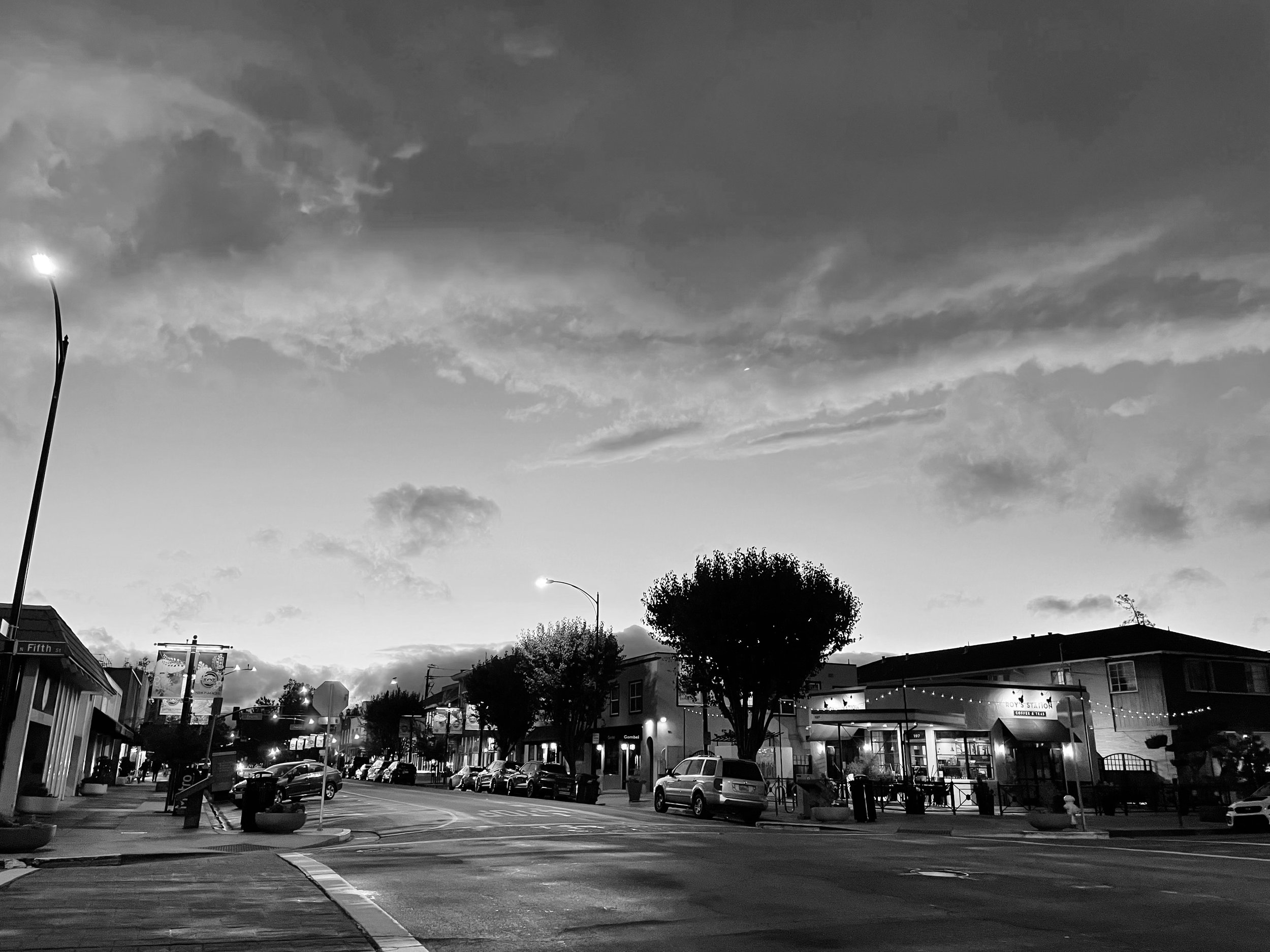
“San Jose Japantown is our home, our heart, our family. It is forever a part of who we are.”
pj“Taiko and San Jose Japantown are inextricably linked. It’s given me my sense of belonging.”

roy“It’s really providing that cultural heritage, the sense of pride within our identity…”

PJ & roy“We are reminded of the hardships and challenges that our parents and grandparents endured through the memorials, artifacts, and tributes throughout Japantown.”

Please visit our beloved community the next time you’re in San Jose.
A few of Roy and PJ’s Japantown favorites include…
Japanese American Museum of San Jose →

“We hope our work will continue to bridge and strengthen communities around the power of the arts and especially taiko.”